By Kathy Reid-Shirley, BSc, RN | Urogynecology Specialist Nurse
A pessary is a soft silicone device that sits inside your vagina to support your pelvic organs—and it could be a life-changing alternative to surgery for prolapse.
I can never forget the many women who come into my clinic in tears. Sometimes they tell me they've been avoiding leaving the house because of how uncomfortable the prolapse feels, or they've stopped helping with their grandchildren, or given up on things they love like gardening. Then, thirty minutes later, they walk out with a properly fitted pessary—and a completely different outlook. "I cannot believe something so simple could make such a huge difference."
Quick Summary
- A pessary is a simple device placed inside the vagina to support prolapsed organs
- 5% of women report symptom improvement—this is evidence-based, first-line treatment
- You can use a pessary long-term (years, even decades) without needing surgery
- Many are self-managed—you insert and remove it yourself, staying in control

💡 77% of specialists recommend pessaries as first-line treatment—not a last resort.

What Exactly Is a Pessary?
A pessary is a device that sits inside your vagina—similar to a tampon—to support your pelvic organs and hold them in position. Made from soft, medical-grade silicone, it is flexible and comfortable.
Think of it like internal scaffolding: it provides the support your weakened pelvic floor muscles cannot provide right now. Here's the important part—pessaries are a genuine long-term alternative to surgery. For many women, a pessary manages symptoms beautifully for years, sometimes indefinitely.
Pessaries Work Best as Part of an Overall Plan
A pessary is excellent on its own, but it works even better alongside other treatments.
Pelvic floor exercises strengthen the muscles that support your organs. Many women work with a women's health physiotherapist to ensure they're doing them correctly and consistently.
Vaginal oestrogen moistens and plumps the vaginal tissues, keeping them healthy and better able to hold a pessary comfortably. After menopause especially, vaginal oestrogen makes a significant difference to how well a pessary fits and feels.
Think of it this way: the pessary provides immediate support while pelvic floor exercises strengthen your body's own system over time. Together, they give you the best possible outcome.
Does It Actually Work?
Absolutely. Research shows 98.5% of women using pessaries report symptom improvement, and 95% are satisfied with treatment.¹ Another study found over 90% of women were happy with pessaries and saw significant quality of life improvements.² The evidence is clear: pessaries work.
Who Can Benefit From a Pessary?
In my five years fitting pessaries, I have helped women across every stage of life:
- Post-menopausal women who want to stay active—caring for relatives, gardening, keeping up with grandchildren
- Young mums after childbirth who aren't done having babies and want to stay active
- Women who want to avoid surgery or aren't suitable candidates due to other health conditions
- Anyone wanting to try non-surgical options before considering invasive treatment
Pessaries are not just for older women. I fit them for women in their twenties through to women in their nineties. Prolapse is not about age.
Types of Pessaries
There are several types, each suited to different needs. In clinic I have a selection of 10 types of pessaries to choose from.
During a fitting appointment, I would assess the patients prolapse and select the right type of pessary. It may take one or two attempts to find the perfect fit—that is completely normal. After a fitting , I have the patients walk around for a bit to ensure it's comfortable and I also have them pass urine, to ensure they can before leaving. All patients leave with a contact card so they can reach our team if they have further questions or issues .
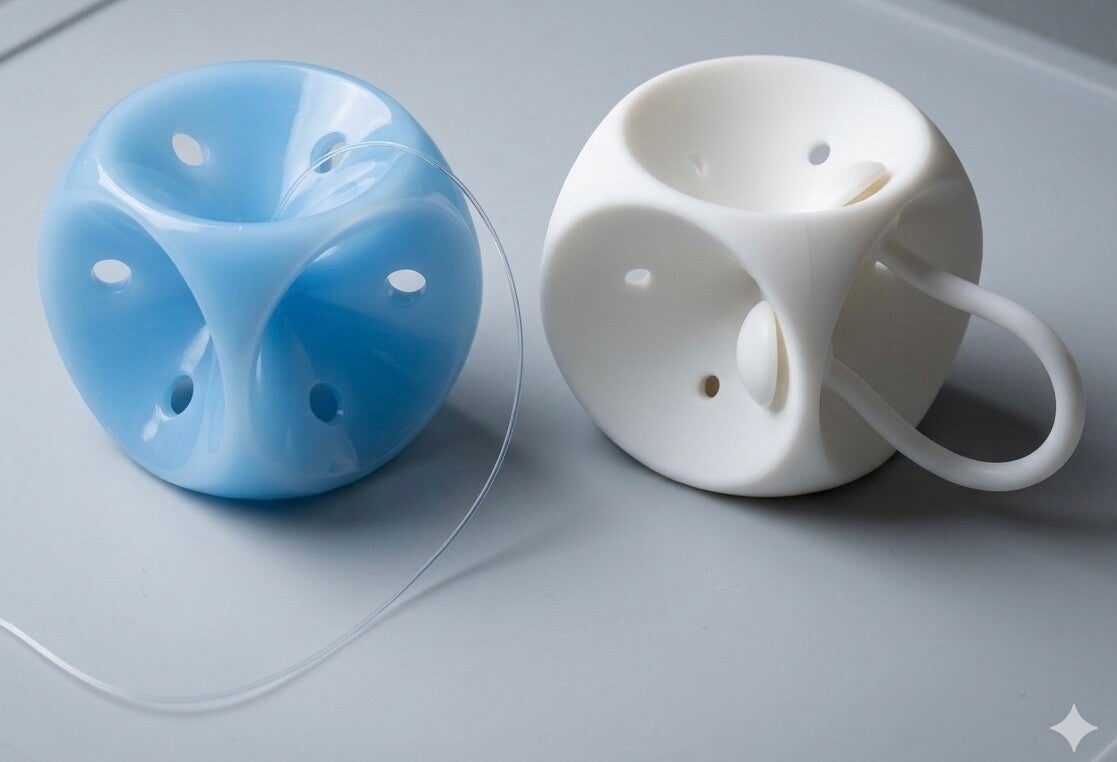
The cube pessary
My personal favourite after fitting hundreds. Its unique shape supports all types of prolapse simultaneously—bladder, uterus, and bowel. When fitted properly, you shouldn't feel it or see it. When taught how to use it, women insert and remove it themselves, taking it out for 12 hours daily (usually overnight). It has low complication rates, minimal risk of vaginal irritation, and can be used for years with 6–12 month check-ups.

The ring pessary
The most commonly fitted type and works well for mild to moderate prolapse. It's straightforward to use and can often stay in during sex. Moderate risk of vaginal irritation. Can be managed by patients when taught how to use it. 6 monthly check ups

The Gellhorn pessary
Shaped like a mushroom and offers excellent support for more advanced prolapse. Moderate risk of vaginal irritation. 4-6 monthly check-ups. Managed by clinician.
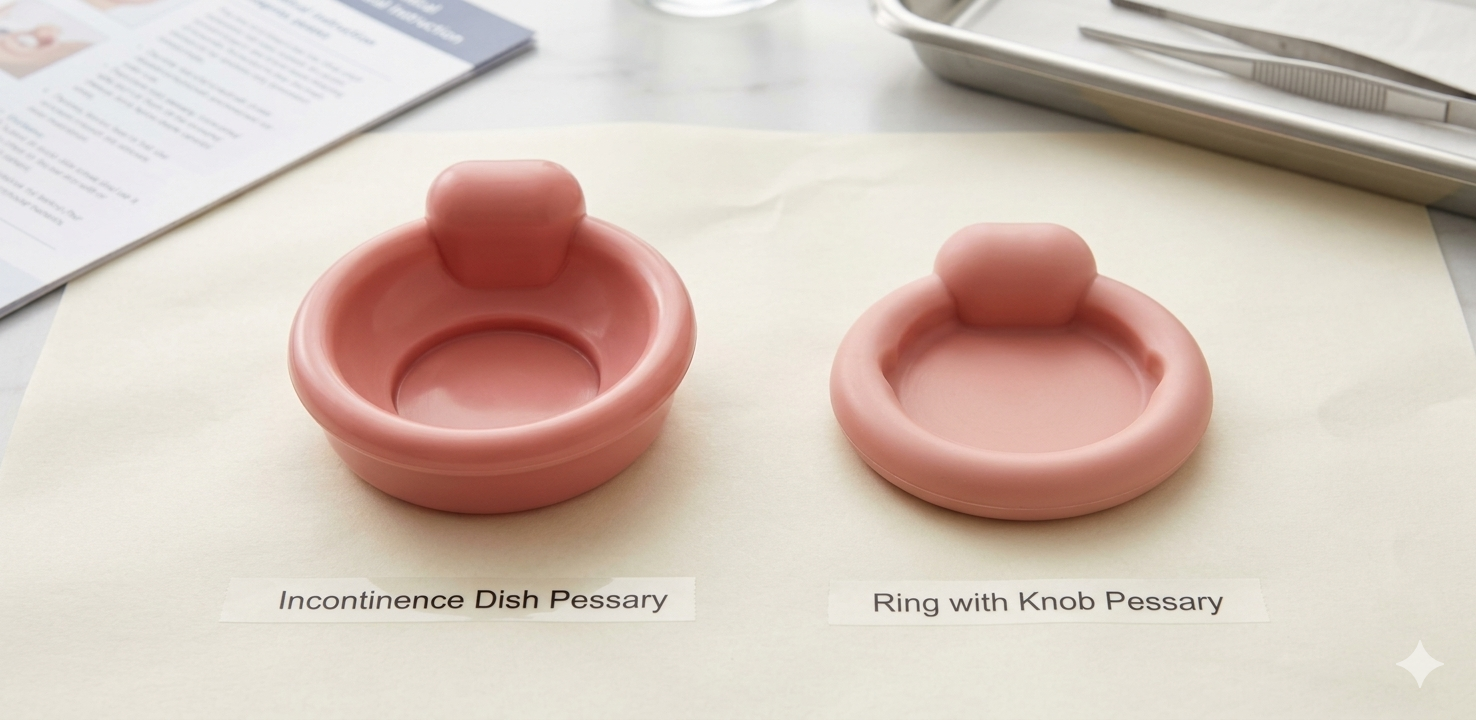
The Ring with knob / incontinence dish pessary
This pessary can be helpful to women with incontinence issues as the knob appliances some pressure to the neck of the bladder reducing or eliminating leaking caused from stress of coughing , sneezing , laughing or jumping
✅ Many pessaries are self-managed. Insert, remove, rinse yourself—you stay in control of your care.
Your Questions Answered
Will it hurt? No. Once you remain relaxed the fitting should be easy. When fitted properly, it should not hurt. You might feel some pressure initially, but not pain.
Will my partner feel it? Some pessaries (like the cube) need to be removed before sex. Others (like the ring) can stay in. Your specialist will advise you.
Will it fall out? Not if fitted properly. It stays in during normal activities, including exercise. It can occasionally fall out when passing very firm stool.
Is it hard to care for? Not at all. If self-managed, you simply remove it daily, rinse with warm water, and reinsert. If not self-managing, you'll attend a check-up with your pessary nurse every 4–6 months for a vaginal examination.
Will I eventually need surgery? You might never need surgery. Many women use pessaries for years—even decades—as a permanent solution. If you do reach a point where surgery seems right, discuss the benefits and risks carefully with your doctor.
"The transformation is not just physical—it is emotional. A pessary gives you back your freedom and your confidence."

What I've Seen in Five Years
Fitting pessaries is one of the most rewarding parts of my job. I've seen women arrive in tears and leave confident. I've watched grandmothers return to playing with their grandchildren. I've helped young mums get back to running or jumping on a trampoline and living without constantly worrying.
The transformation is not just physical—it's emotional. Prolapse can feel isolating and deeply embarrassing. A pessary gives you back your freedom and your confidence
What I Want Every Woman to Know
Surgery is not your only option. A pessary provides excellent long-term management—for years, even decades—without an operation.
- You can get your life back. With a properly fitted pessary, you can exercise, garden, play with grandkids, travel—all of it.
- You are in control. Many pessaries are self-managed. It is never too late—whether just diagnosed or living with prolapse for years.
If your GP doesn't fit pessaries, or only fits simple types that aren't helping: request a referral to pelvic health physiotherapy, ask for vaginal oestrogen (especially if your vagina feels dry or irritated), and request to see a Urogynecology Specialist Nurse to explore other pessary options.
Don't give up—keep advocating for yourself. Reach out to me if you have questions .
— Kathy Reid-Shirley, BSc, RN, Urogynecology Specialist Nurse
A Quick Note: Everything shared here is for educational purposes based on professional experience and current research. It is not medical advice tailored to your situation. Every woman's prolapse is different. If you are experiencing symptoms, please see a healthcare provider for assessment.
References
- Nguyen TM et al. Healthcare. 2025;13(21):2659
- Zhou Y et al. International Urogynecology Journal. 2024;35:59–67
- Sethi N, Yadav GS. Journal of Clinical Medicine. 2025;14(8):2737
Add comment
Comments